
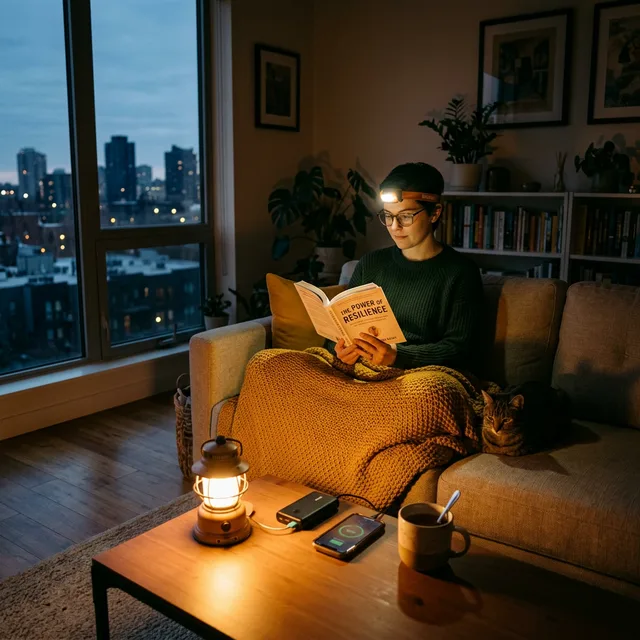
When the lights suddenly cut out in a high-rise, it’s easy to assume they’ll be back on in a few hours. But severe weather, grid overload, and infrastructure failures can leave cities without power for days—or even weeks, as seen during the 2021 Texas freeze.
In an apartment, your lack of control over central heating, water pumps, and security systems makes a long-term blackout highly stressful. The first 72 hours are critical. Here is a step-by-step action plan to follow the minute the power drops.
The First 10 Minutes: Secure Resources
When the power goes out, you are racing against the clock. Many high-rise apartments rely on electric pumps to push water to upper floors. When the power dies, the water pressure will disappear soon after.
- Test the Water: Turn on your tap. If water is still flowing, immediately fill your bathtub. This provides 40-70 gallons of emergency water for flushing toilets and basic hygiene.
- Find Your Light: Grab your primary flashlight or headlamp. Do not rely on your phone’s flashlight; you need to preserve your mobile battery.
- Check the Scope: Look out the window. Is it just your building? Your block? The whole city? It helps to know the scale of the outage.
🔍 Reddit Insight: Hands-Free Lighting
"Everyone buys heavy, tactical flashlights, but my absolute best purchase was a $15 headlamp. Try holding a flashlight while fixing a meal or making an emergency toilet. You need your hands free in the dark." — r/urbansurvival
Hours 1 to 12: Preserve and Protect
Now that you are secure, your goal shifts to extending the life of your perishable resources.
Lock Down the Fridge: A closed refrigerator will keep food safe for about 4 hours. A full freezer will hold temperature for 48 hours (or 24 hours if half-full). Do not open the doors. If you need food, eat your dry pantry goods first.
Manage Device Batteries:
- Turn your phone on “Low Power Mode.”
- Dim the screen brightness to the minimum usable level.
- Turn off Wi-Fi and Bluetooth, which constantly search for non-existent connections. For long outages, a dedicated power bank is essential.
- Text, don’t call. Texts require vastly less bandwidth and can slip through congested cell towers when voice calls fail.
Hours 12 to 48: Sanitation and Comfort
By day two, the romance of “camping in the living room” fades. Routine tasks become difficult.
Temperature Control: If it’s winter, single out the smallest room in your apartment (usually a bedroom) to be your “warm room.” Close the door, put a rolled towel under the gap, and pitch a small indoor camping tent on the bed. Your body heat will keep the inside of the tent surprisingly warm.
Emergency Sanitation: Once your toilet stops flushing, you cannot use it normally. Use the water you saved in the bathtub to do a “bucket flush” (pour a gallon directly into the bowl to force a flush). If you are totally out of water, you will need to construct a two-bucket emergency toilet using heavy-duty trash bags and sawdust or kitty litter.
Hours 48 to 72: Information and Endurance
By day three, community stress levels will be high. Rumors spread rapidly in darkness.
- Stay Informed: Use a battery-powered or hand-crank NOAA weather radio to get official updates. Don’t rely on social media rumors.
- Eat Perishables Carefully: If the fridge has been warm for more than 4 hours, meat, poultry, fish, eggs, and leftovers must be thrown out. Do not taste food to test it. “When in doubt, throw it out.”
- Check on Neighbors: In urban environments, community is your ultimate prep. Check on elderly neighbors to ensure they have water and aren’t having medical emergencies.
The Most Important Step
The worst time to plan for a blackout is when the room goes dark. Tonight, do one thing: buy a cheap headlamp, put fresh batteries in it, and hang it on the doorknob of your bedroom. When the grid eventually fails, that small act will make you the calmest person in your building.