
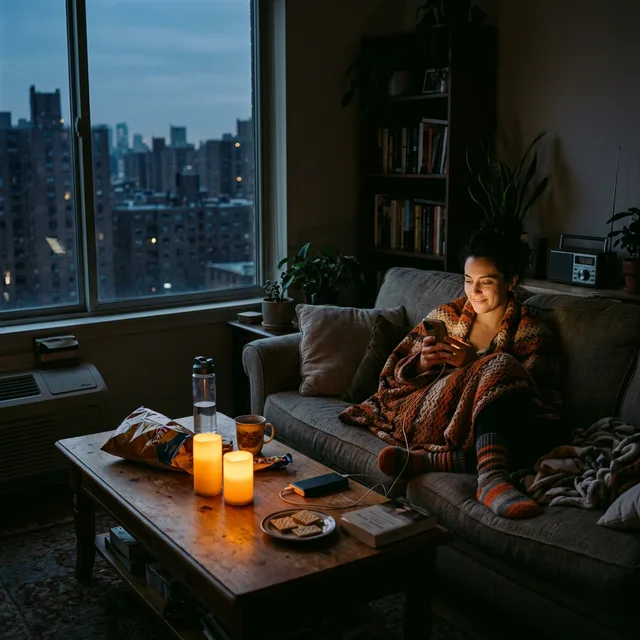
When the power goes out in a house, you fire up a generator in the garage. When the power goes out in an apartment, you sit in the dark and wonder what to do. If your outage stretches past a few hours, read our full 72-hour blackout action plan. For now, let’s fix the basics.
The First 30 Minutes: Don’t Panic
- Check if it’s just you. Look out your window. If neighbors still have lights, check your breaker box.
- Unplug sensitive electronics to prevent surge damage when power returns.
- Open your fridge ONCE, grab what you need, and close it. A closed fridge stays cold for 4 hours.
Light Sources (No Candles!)
Candles in apartments are a fire hazard, especially in small spaces. Instead:
- LED headlamps are the #1 go-to. Hands-free, battery-efficient, no fire risk.
- LED lanterns with a hook can hang from curtain rods to light an entire room.
- Glow sticks are cheap, safe, and great for bathrooms.
Staying Warm (Winter Outages)
Your apartment will lose heat within 2-3 hours in winter. For a deep dive on surviving cold without central heating, see our full winter power outage warmth guide.
- Layer up: thermals, fleece, wool socks.
- Mylar blankets taped over windows reflect heat inward.
- A Mr. Heater Buddy is the only indoor-safe propane heater—but check with your landlord first.
Food Without a Stove
- High-calorie bars (Datrex, SOS) require zero prep.
- Canned foods can be eaten cold. Canned chili, soup, and fruit are perfectly safe unheated.
- A Sterno can + metal cup = hot coffee or ramen in 5 minutes.
Communication
Your phone is your lifeline. Keep a 20,000mAh power bank charged at all times. One full charge gives most phones 4-5 full refills—enough for days.
When to Leave
If the outage lasts more than 48 hours in extreme temperatures, go to a public warming/cooling center. Know where these are before an emergency.