
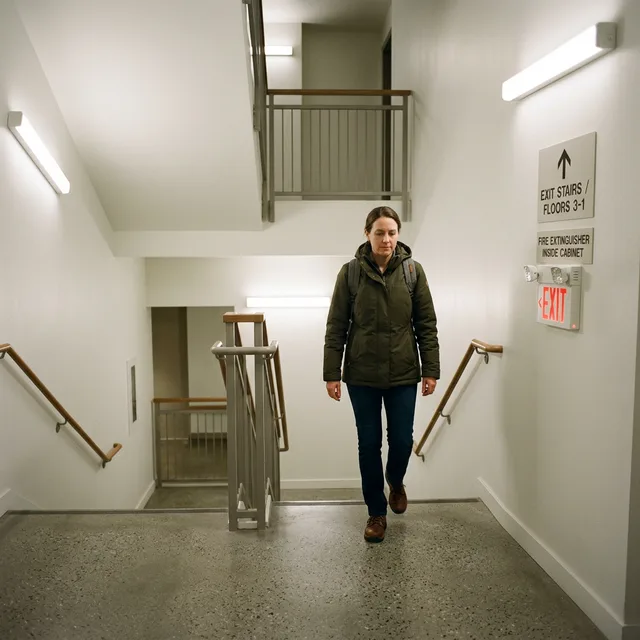
Most evacuation advice assumes you can walk out a front door. But if you live on the 12th floor of a high-rise, evacuation is a fundamentally different challenge. If the emergency is a fire, read our apartment fire safety guide first — you may need to defend in place rather than evacuate.
Know Your Building
Before any emergency, do this homework:
- Count the stairwells. Most buildings have at least two. Never assume the closest one is the best option.
- Find the fire exits on your floor. Walk the route at least once.
- Check if your building has a roof access for helicopter evacuation (rare but worth knowing).
The Go-Bag Rule
For high-rise dwellers, your go-bag needs to be lighter, smaller, and faster to grab than a ground-floor prepper’s bag. You’re carrying it down 10+ flights of stairs.
Keep it at 15 lbs max. Essentials only:
- Water bottle (full)
- 1-day food (energy bars)
- N95 mask (for smoke or debris)
- Headlamp
- Phone charger (power bank)
- Cash ($100 in small bills)
- Copies of ID + insurance docs in a waterproof pouch
Earthquake vs Fire: Different Strategies
Fire: Get OUT. Take stairs, never elevators. Crouch low if there’s smoke. Close every door behind you.
Earthquake: Stay IN (initially). Drop, cover, hold. Most injuries happen from falling objects, not building collapse. Evacuate only after shaking stops and you’ve assessed damage.
Communication Plan
Cell towers get overloaded in emergencies. Text messages go through more reliably than calls. Have a family group chat set up and an out-of-area emergency contact who can relay messages.
For Pet Owners
If you have a dog or cat, your evacuation time doubles. Keep a pet carrier by the door and a small bag of food with your go-bag at all times.