
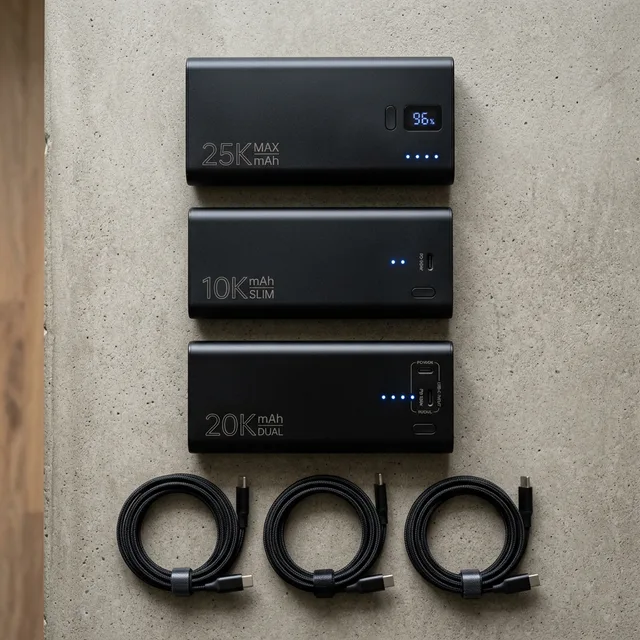
In any urban emergency, your phone is your most critical survival tool. It’s your flashlight, radio, map, communication device, and news source combined. Which means a dead phone battery is a genuine survival threat. When the grid goes down, check our apartment power outage guide for the full action plan — but a charged power bank is step one.
What to Look For
- Capacity: At least 20,000mAh (4-5 full phone charges)
- Output: USB-C + USB-A ports for versatility
- Size: Must fit in a go-bag side pocket
- Bonus: Solar or hand-crank charging capability
Our Top 3 Picks
1. Anker PowerCore 20,000mAh — Best Overall ($34.99)
The gold standard. Charges an iPhone 15 approximately 5 times. Slim enough to slide into a jacket pocket. USB-C fast charging both ways.
2. BLAVOR Solar Power Bank 20,000mAh — Best for Extended Outages ($29.99)
Has a built-in solar panel. Don’t expect fast solar charging—it’s more of a trickle-maintenance feature. But in a multi-day outage, even slow solar charging is better than nothing.
3. Nitecore NB10000 — Best Ultralight ($39.95)
At only 5.3 oz, this is the lightest 10,000mAh bank on the market. Perfect for high-rise go-bags where every ounce matters.
Pro Tip: Rotation Charging
Keep your power bank charged at 80% at all times. Set a monthly phone reminder to top it off. A dead power bank during an emergency is just expensive dead weight. And remember: if cell towers are down too, even a full battery won’t help — learn our cell network outage communication plan.
Skip These
- Anything under 10,000mAh — not enough capacity for a real emergency
- “50,000mAh” Amazon listings for $15 — these are almost always lies about actual capacity
- Anything that only charges via micro-USB — it’s outdated and slow