
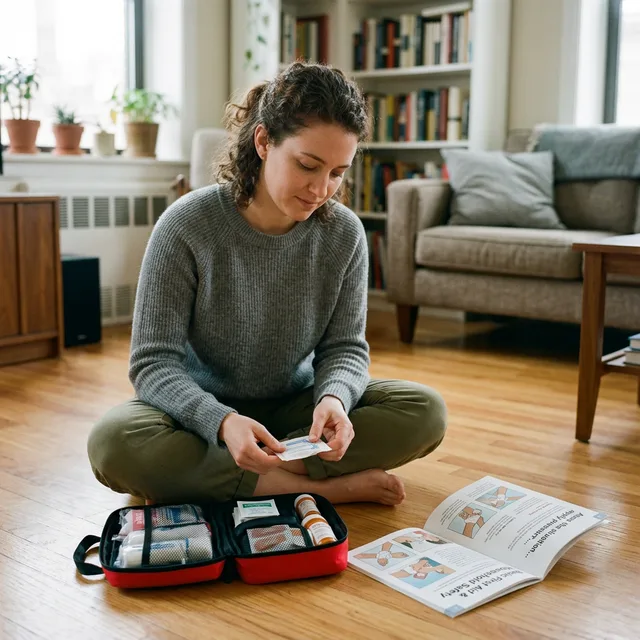
In a true disaster, the 911 system will either be overloaded or completely non-functional. The ambulance isn’t coming. If someone in your apartment slips on shattered glass during a blackout, or burns their hand on a camping stove, you are the first responder.
Having a massive first aid kit means nothing if you don’t know the physiology behind the tools. Before building a trauma kit, invest a weekend in learning these five absolute essential skills. You can grab most supplies from our Dollar Tree prepping list for under $20.
1. Stop Massive Bleeding (The Tourniquet)
This is the most critical trauma skill. Massive arterial bleeding can cause death in less than 3 minutes.
- The Skill: You must learn how to apply a CAT (Combat Application Tourniquet). It must be applied “high and tight” (above the wound, closer to the body) and tightened until the bleeding completely stops.
- The Error: Most people do not tighten tourniquets enough because it is extremely painful for the patient. If you can slip a finger under the strap, it is too loose.
- Action: Buy a legitimate North American Rescue CAT tourniquet (beware of Amazon fakes) and practice applying it to your own arm and leg one-handed.
2. Wound Cleaning and Infection Prevention
In grid-down situations, massive wounds rarely kill people directly; the resulting infections do.
- The Skill: Learn irrigation. Tap water is generally fine if it’s safe to drink. The key is pressure. Use a syringe (without a needle) to blast water into the wound and wash out dirt and debris.
- The Error: Do not pour hydrogen peroxide or rubbing alcohol into an open wound. While it kills bacteria, it also destroys healthy tissue, delaying healing and increasing infection risk later. Wash with clean water, apply an antibacterial ointment, and cover cleanly.
💡 TIP: Super Glue for Cuts
For clean, straight cuts (like a knife slip) that won't stop bleeding but aren't deep enough for stitches, medical-grade super glue or even standard cyanoacrylate can hold the skin edges together.
3. Burn Management
During blackouts, people revert to boiling water on unstable camping stoves and using open-flame candles. Burn rates skyrocket.
- The Skill: Immediately run cool (not freezing cold) water over the burn for at least 10 to 15 minutes. This stops the heat from radiating deeper into the tissue.
- The Error: Never apply butter, grease, or ice to a burn. Butter traps the heat in, and ice damages the already compromised tissue. If blisters form, never pop them. They are nature’s sterile bandage.
4. The Heimlich and CPR
If you have a family, you cannot outsource these skills.
- The Skill: Take an official Red Cross or American Heart Association CPR class. Modern CPR emphasizes “hands-only” chest compressions (pressing hard and fast in the center of the chest at 100-120 beats per minute) rather than mouth-to-mouth.
- Why it matters: Brain death occurs in 4 to 6 minutes without oxygen. You cannot Google how to do CPR while someone is dying on your living room floor.
🔍 Reddit Insight: Build It Yourself
"Stop buying those $30 pre-made red first aid kits at Target. They are 90% cheap bandaids and useless alcohol prep pads. Build your own in a clear plastic bin: Get real trauma shears, a CAT tourniquet, Israeli bandages, burn gel, and lots of 4x4 gauze. Quality over quantity." — r/TacticalMedicine
5. Identifying Shock
Shock is a life-threatening condition where the body is not getting enough blood flow. It often follows trauma or severe dehydration.
- The Signs: Pale, clammy skin, rapid breathing, wide pupils, and confusion.
- The Treatment: Have the person lie flat. If they have no head, neck, or back injuries, elevate their feet 12 inches to help blood return to the core. Keep them warm with a blanket. Do not give them anything to eat or drink if they are falling unconscious or vomiting.
Your brain is the best medical tool you own. Spend a few hours this weekend watching Stop the Bleed or Red Cross tutorial videos. You might save a loved one’s life.