
The survival community is obsessed with the “Bug Out Bag”—a massive, 60-pound hiking backpack filled with fishing line, hunting knives, and wilderness gear. If you live in an apartment, this concept is completely backward. You aren’t trekking into the woods; your apartment is your primary shelter. (That said, if you still want one, here’s how to build a bug out bag for under $50.)
The real danger isn’t being stuck in your apartment; it’s being stuck across the city when the subway stops running, the cell networks gridlock, and the rioting starts. You don’t need a Bug Out Bag. You need a Get Home Bag.
What is a Get Home Bag?
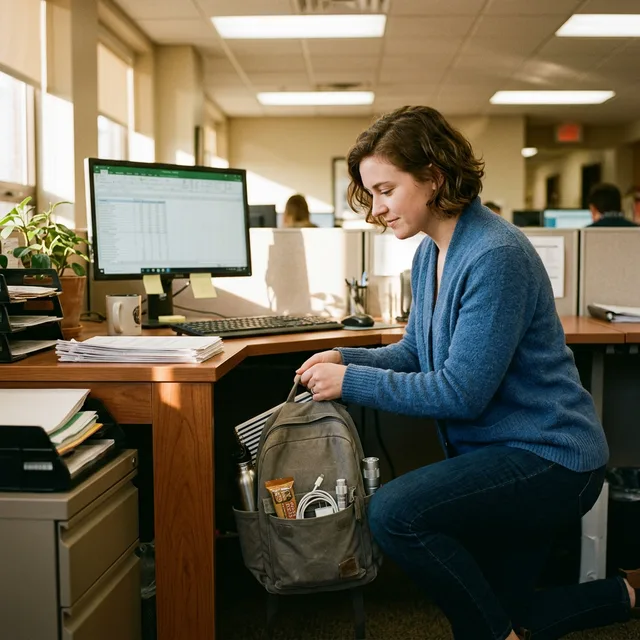
A Get Home Bag (GHB) is a small, discreet backpack kept under your desk at work or in the trunk of your car. Its singular purpose is to keep you alive and physically capable of walking 15 to 20 miles across an urban environment to reach your apartment.
💡 TIP: The Grey Man Theory
Never use a tactical, camouflage, or military-style backpack for your GHB. In a panicked city, looking like a "survivalist" makes you a target. Use a standard JanSport, a plain black laptop bag, or an Adidas gym bag. Look like an ordinary commuter having a bad day.
The 4 Pillars of Getting Home
When building this kit, every ounce matters. Do not pack a tent. Do not pack a machete. Pack to solve the four immediate urban problems.
1. Mobility (The Most Important Preps)
You cannot walk 15 miles in dress shoes or heels.
- Footwear: Pack a broken-in pair of comfortable running shoes or lightweight hiking boots.
- Socks: Two pairs of high-quality wool socks (Darn Tough or Smartwool). Blisters will stop you faster than starvation.
- Clothing: A neutral-colored changing of weather-appropriate clothes (e.g., a lightweight rain shell or a fleece).
2. Environmental Protection
Cities are dirty, and disaster zones are worse.
- N95 Masks: For smoke, 9/11-style dust clouds, or bio-hazards.
- Eye Protection: Simple clear safety glasses to protect against debris.
- Gloves: Heavy-duty leather work gloves. You may have to climb over rubble, clear broken glass, or pry open a jammed door.
3. Immediate Sustenance
You aren’t cooking a meal; you are fueling a marathon walking effort.
- Water: 2 liters of water in durable bottles (like Nalgene). Do not pack a heavy water filter unless your commute crosses a river.
- Calories: Dense, ready-to-eat calories that don’t provoke thirst. Cliff bars, high-calorie protein bars, and a bag of trail mix.
4. Navigation and Illumination
When the power fails, the subway tunnels and street canyons become pitch black.
- Flashlight: A high-lumen, compact tactical flashlight (for blinding attackers) AND a headlamp (for hands-free walking).
- Physical Map: Google Maps will not work without cell towers. Print a physical street map of your city and pre-highlight 3 separate walking routes from your office to your apartment.
- Cash: In small denominations ($1, $5, $10). Credit card machines won’t work, and you might need $50 to bribe a cab driver or buy a necessary item from a panicked convenience store clerk.
If you don’t commute to work, your priority remains the same. The goal of urban prepping isn’t to flee to the woods; it’s to get home safely, lock the reinforced door, and ride out the storm.