
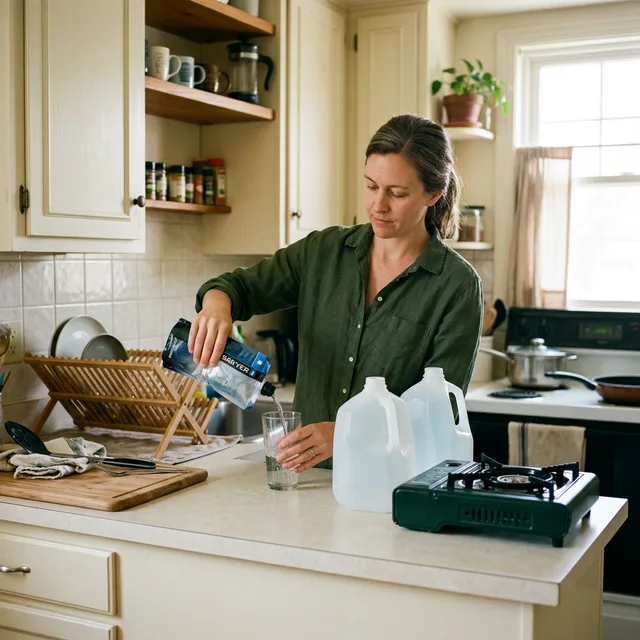
When a major water main break occurs or a natural disaster compromises your city’s treatment plant, a “boil water advisory” can be issued in minutes. But what if you don’t have a premium survival filter, or worse, the power is out and your electric stove doesn’t work? Make sure you have emergency water stored before you worry about purification.
As an apartment renter, your options are limited by space and equipment. Here are five highly effective ways to purify tap or stored water using items you likely already have or can easily store in a drawer. If you prefer a dedicated filter, see our Sawyer Mini vs LifeStraw comparison.
1. The Rolling Boil (The Gold Standard)
Boiling is the most reliable way to kill pathogens, viruses, and bacteria. According to the CDC, water should be brought to a rolling boil for 1 full minute (or 3 minutes if you live at an altitude above 6,562 feet).
- How to do it without power: A portable butane camping stove (like those used for hot pot) is perfectly safe for indoor use if you crack a window.
- The downside: It requires fuel and leaves water tasting “flat.”
💡 TIP: Fixing "Flat" Water
Pour the cooled boiled water back and forth between two clean containers. This re-oxygenates the water and restores its normal taste.
2. Unscented Household Bleach
If boiling isn’t an option, standard household bleach is an effective emergency purifier. The EPA recommends using regular, unscented liquid household chlorine bleach (5.25% to 8.25% sodium hypochlorite).
- The Ratio: Use 2 drops of bleach per quart (or 8 drops per gallon) of clear water.
- The Process: Stir well and let it sit for 30 minutes. The water should have a slight chlorine odor. If it doesn’t, repeat the dose and wait another 15 minutes.
🔍 Reddit Insight: The Bleach Pitfall
"Please spread the word to NEVER use 'splashless' or 'color-safe' bleach for water purification. They contain extra chemicals and soaps that are incredibly toxic to drink. It MUST be regular, unscented bleach." — r/preppers
3. Water Purification Tablets
These are incredibly cheap, take up zero space, and have a shelf life of up to 5 years. A standard bottle of Potable Aqua contains 50 tablets, enough to treat 25 quarts of water.
- How to use: Drop 2 tablets into a quart of water, cap loosely to allow a little leakage, shake to clean the threads of the bottle, tighten, and wait 30 minutes.
- Why keep them in an apartment: They fit in a kitchen drawer and require absolutely zero fuel or heat.
4. Solar Water Disinfection (SODIS)
If the weather permits, you can use the sun’s UV rays to kill biological pathogens. This method is officially recognized by the World Health Organization.
- The Process: Fill a clear PET plastic bottle (like a standard soda or water bottle) with relatively clear water. Place it on a reflective surface (like a piece of tin foil on your balcony) in direct, intense sunlight.
- The Timeframe: Leave it for at least 6 hours in bright sun, or up to 2 days if it’s cloudy.
- The Catch: It only kills biology. It does not remove chemical contaminants or heavy metals.
5. The DIY Two-Bucket Filtration System
If you need to filter questionable water (like rainwater collected from your balcony), you can build a biological filter using two buckets, sand, and activated charcoal (available in the aquarium section of pet stores).
Drill holes in the bottom of the top bucket. Layer coffee filters, activated charcoal, fine sand, and gravel. Pour water into the top, and let it drip down into the bottom bucket. Note: You must still boil or chemically treat the water after this step; this only removes sediment and chemicals, not microscopic bacteria.
Your Immediate Next Action
Most people wait until the grocery store shelves are empty to worry about water. Today, take five minutes to do an inventory: do you have a bottle of unscented bleach under the sink, and an eye dropper to measure it? If not, that’s a $4 purchase that could literally save your life during an urban crisis.