
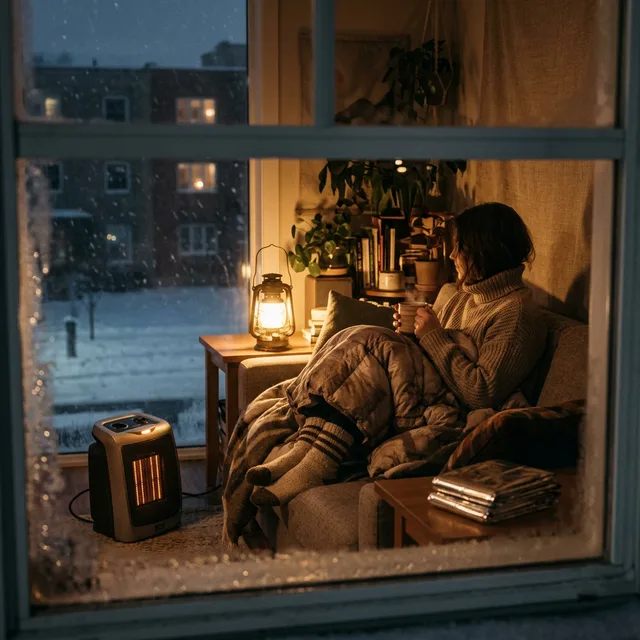
During a severe winter storm, a power outage transforms your apartment from a cozy sanctuary into a concrete icebox. Without central heating, temperatures in high-rise buildings can drop into the 40s (Fahrenheit) within just 24 hours.
If you don’t have a roaring fireplace or a gas generator—which are impossible and dangerous in an apartment setting—you must rely on the physics of insulation and body heat. For the full 72-hour blackout action plan covering food, water, and communication, see our urban blackout guide. Here are the life-saving steps to stay warm when the thermostat drops to zero.
1. Shrink Your Living Space (The Micro-Environment)
It is impossible to heat a 900-square-foot apartment using body heat. Therefore, you must make your living space dramatically smaller.
Pick the smallest interior room in your apartment (usually a bedroom or a large walk-in closet with no exterior walls). Move all your supplies, family members, and pets into this room. Close the door, and place a rolled-up towel under the door gap to halt drafts. You are now trying to heat 100 square feet instead of 900.
💡 TIP: The Indoor Tent Hack
Set up a cheap 2-person camping tent directly on top of your mattress. Sleeping inside the closed tent traps your body heat in an incredibly small cubic volume. It can be 40°F in the bedroom, but 65°F inside the tent.
2. Seal the Envelope
Windows are massive thermal leaks. Even double-paned glass bleeds heat. Take thick blankets, comforters, or even bubble wrap, and tape them directly over the windows. The darker the blanket, the better, though you may want to open them on the south side for an hour during peak daylight to let solar radiation in, then seal them tightly before sunset.
3. The Layering System (Not All Clothes Are Equal)
Throwing on three heavy sweatshirts will actually make you colder if you start to sweat. You need a systematic approach to layering:
- Base Layer (Moisture Wicking): Wool or synthetic thermals against the skin. Never cotton. Cotton absorbs sweat, dries slowly, and pulls heat away from your skin.
- Middle Layer (Insulation): Fleece, down jackets, or thick wool sweaters. This layer traps dead air, which is what actually keeps you warm.
- Outer Layer (Wind/Water Block): Not strictly necessary indoors, but a windbreaker can help block persistent drafts.
🔍 Reddit Insight: Cold Extremities
"If your feet are cold, put a hat on. Your body pulls warm blood away from your fingers and toes to protect your brain and vital organs. Keeping your head and neck wrapped up with a scarf and beanie tricks your body into sending warmth back to your feet." — r/wintercamping
4. Safe Indoor Heaters (Use With Extreme Caution)
Most heaters require electricity, and gas/charcoal heaters produce deadly carbon monoxide. You cannot use an outdoor grill, camp stove, or oven to heat your apartment.
The only safe secondary combustion heater for indoor use is an indoor-safe propane heater, specifically designed for enclosed spaces (like the popular Mr. Heater Buddy). These devices have low-oxygen shutoff sensors.
- Rule of thumb: Even with “indoor safe” heaters, you must crack a window at least half an inch to ensure fresh oxygen circulation to prevent carbon monoxide buildup.
5. The Hot Water Bottle Trick
If you have a portable camping stove to boil a small amount of water, fill a rubber hot water bottle or a heavy-duty Nalgene bottle with hot (not boiling) water. Put it between your thighs or tuck it across your chest inside your jacket. This targets the femoral artery or your core, pushing warmed blood throughout your entire body instantly.
During the infamous 2021 Texas blackout, the people who stayed comfortable weren’t the ones with the most expensive gear; they were the ones who understood how to trap heat efficiently. Shrink your space, layer smartly, and never wear cotton. You can build a basic cold-weather kit for under $20 — see our budget apartment preps guide.