
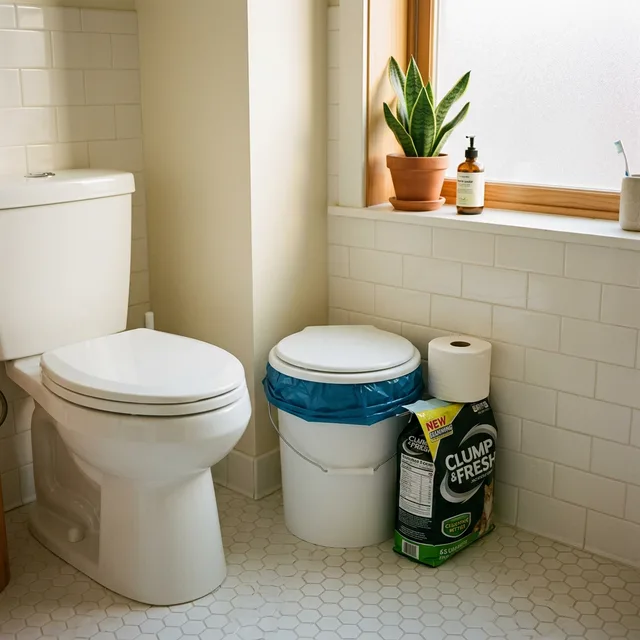
No one likes talking about it. It’s gross, it’s uncomfortable, and it shatters the illusion of modern convenience. But if the power goes out long enough, or water mains rupture, your apartment’s toilet will stop flushing.
In a high-density urban building, a sanitation failure isn’t just an inconvenience; it constitutes an immediate, severe biohazard. Within 48 hours, the smell will be unbearable. Within a week, disease risk skyrockets. Brush up on your first aid skills too — poor sanitation breeds illness fast. Here is exactly how to manage human waste in an apartment without running water.
Phase 1: The “Bucket Flush” (Short Term)
If the water is shut off but the city’s sewer lines are still intact, your toilet still technically works. Gravity is what forces a flush, not water pressure.
As long as you have greywater (water saved in your bathtub, dishwater, or rain water), you can manually flush the toilet.
- Pour about a gallon of water rapidly directly into the toilet bowl.
- The sudden volume of water mimics the action of the tank dropping, triggering the siphon effect and flushing the waste down the line.
- Warning: Do not do this if there has been a massive earthquake or severe flooding, as the municipal sewer lines may be broken or backing up.
Phase 2: The Two-Bucket System (Long Term)
If the sewers are compromised or you are completely out of water, you must switch to a dry system immediately.
The golden rule of emergency sanitation is separation. Mixing urine and feces is what creates raw sewage and the horrific ammonia smell. By separating liquids and solids, you eliminate 90% of the odor and biohazard risk.
What You Need:
- Two 5-gallon Home Depot/Lowe’s buckets with tight-fitting lids.
- Heavy-duty black contractor trash bags (do not use cheap kitchen bags; they will leak).
- A bag of cheap clumping kitty litter, sawdust, or peat moss.
- A snap-on toilet seat designed for 5-gallon buckets (available on Amazon for $15), or a cut pool noodle to pad the rim.
💡 TIP: Pool Noodle Hack
If you don't have a snap-on bucket seat, take a cheap foam pool noodle, cut a slit down one side lengthwise, and wrap it around the rim of the 5-gallon bucket for a surprisingly comfortable seat.
How to Use the System:
Bucket 1: Liquids Only Label this bucket clearly. Do not line it with a bag. When it is nearing full, urine can be carefully disposed of outside in grass or soil (away from any water sources), or poured down an untaxed drain if safe. Urine is generally sterile and manageable.
Bucket 2: Solids Only
- Line this bucket with a heavy-duty contractor bag.
- Pour an inch of kitty litter or sawdust into the bottom.
- After each use, immediately cover the waste completely with another scoop of kitty litter or sawdust. This step is critical. The carbon-rich cover material instantly smothers the odor and dries everything out.
- Snap the tight-fitting lid back on immediately.
🔍 Reddit Insight: Smell Management
"I lived off-grid for two years using a sawdust toilet. The biggest mistake people make is not using enough cover material. If it smells, cover it more. Peat moss actually works significantly better than clay kitty litter for masking odors in confined spaces." — r/homesteading
Disposal Protocol
When the solid-waste bucket is about 60% full (do not let it get heavier than you can easily carry), carefully tie the contractor bag closed. Double-bag it to prevent leaks.
Store tied bags on your balcony or in a designated corner of the apartment until municipal garbage services resume or official emergency hazmat drop-offs are established by FEMA or the city. Never leave these bags in indoor communal trash chutes or hallways.
Sanitation isn’t just about smell; it’s about survival. A $4 bucket and a bag of kitty litter sitting in the back of your closet is the cheapest insurance policy you’ll ever buy for an urban crisis.